
Introduction: The Power of Education
Education Support serves as a powerful catalyst for personal and collective advancement, especially for underprivileged children who often face systemic barriers to learning. In many societies, access to quality education is considered a fundamental right; however, various factors contribute to the marginalization of children from low-income backgrounds, depriving them of essential educational opportunities.
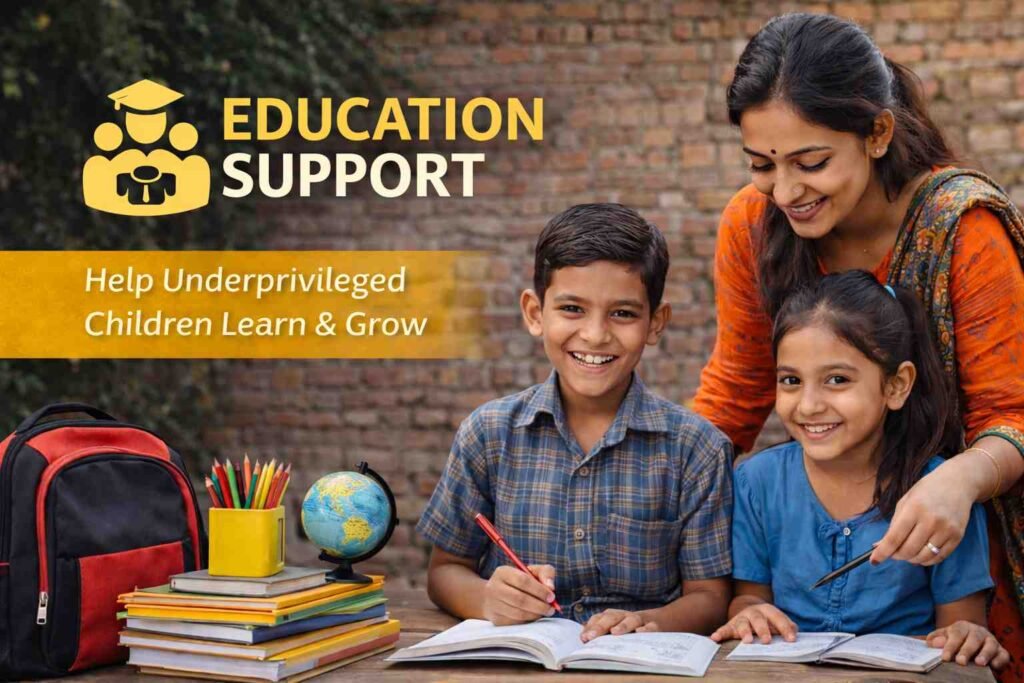
Support for education is vital in breaking the cycle of poverty and fostering an inclusive environment where every child can thrive. By providing resources, mentoring, and access to quality teaching, education support acts as a bridge that connects underprivileged children to a brighter future. This support not only imparts knowledge but also instills confidence, resilience, and a sense of belonging, enabling children to envision and achieve their aspirations.
The critical role of education in fostering equality cannot be overstated. It promotes social justice by addressing the disparities that exist within communities, offering a pathway for upward mobility and self-sufficiency. When children have the opportunity to pursue their education, they are more likely to secure stable employment, contribute positively to their communities, and uplift their families from the grasp of poverty.
Furthermore, education facilitates personal growth and the development of crucial life skills, such as critical thinking, problem-solving, and effective communication. These skills enable individuals to navigate the complexities of life, advocating for themselves and others in an increasingly interconnected world. As underprivileged children receive the education support they need, they not only change their own lives but also create ripples of positive change within society.
Underprivileged children encounter a myriad of challenges that severely impede their ability to access quality education. Socioeconomic barriers rank among the most pressing issues, as families living in poverty often lack the financial resources necessary to support their children’s education. According to the National Center for Children in Poverty, approximately 1 in 5 children in the United States live in families with incomes below the federal poverty level. This economic strain results in limited access to essential resources, such as books, technological tools, and extracurricular activities, which are crucial for holistic educational development.
Furthermore, the absence of a stable home environment can negatively affect a child’s motivation to learn. Many underprivileged children experience frequent changes in housing, which disrupts their education and may lead to lower academic achievement. A study published by the National Bureau of Economic Research found that mobile students are more likely to drop out of school compared to those who remain in the same educational setting throughout their academic journey.
Systemic inequalities also contribute to the struggle for equitable education. Schools located in low-income areas often receive less funding, leading to overcrowded classrooms, outdated materials, and a lack of qualified teachers. A 2019 report from the U.S. Department of Education highlighted that public schools serving predominantly low-income students are often under-resourced when compared to their affluent counterparts. This discrepancy creates a significant gap in educational quality, leaving underprivileged children at a distinct disadvantage.
Moreover, societal stigmas and discrimination further exacerbate their challenges, as children from marginalized backgrounds may not receive the same support and encouragement as their more privileged peers. The cumulative effect of these barriers not only stifles individual potential but also perpetuates cycles of poverty and inequity, underscoring the urgent need for targeted educational support initiatives.
The Importance of Quality Education Support
Quality education serves as a fundamental pillar for the development of individuals and communities, especially for underprivileged children. Accessing quality education empowers children with essential skills and knowledge, turning possibilities into realities and dreams into achievable goals. It is through education that children can develop critical thinking abilities, cultivate creativity, and enhance their problem-solving skills, which are vital in a rapidly evolving world.
The transformative effects of quality education extend beyond individual achievement. Research consistently indicates that children who receive quality education tend to secure better job prospects in adulthood, which in turn fosters economic stability for their families. This stability helps lift entire communities out of poverty, showcasing how investing in education equates to investing in the future of societies. Furthermore, educated individuals are more likely to contribute positively to their communities, whether through civic engagement, volunteerism, or participation in democratic processes.
Quality education also correlates with improved health outcomes, as educated individuals are generally more informed about health issues, nutrition, and preventative care. This awareness significantly reduces the prevalence of diseases and health-related challenges, enhancing the overall well-being of communities. Moreover, a well-educated population can create a ripple effect, as they often prioritize education for their own children, thereby breaking the cycle of poverty. The collective impact of quality education can lead to a more equitable society, reducing gaps in health and economic opportunities.
To summarize, providing access to quality education is not just about individual advancement; it is about fostering an environment where communities can thrive, innovate, and sustain growth. Ensuring that every child, regardless of their background, has access to such transformative education is essential for empowering futures and building resilient societies.
Critical Resources: School Supplies and Learning Materials
Education plays a fundamental role in shaping the future of children, especially for those from underprivileged backgrounds. To facilitate a thriving educational environment, the provision of school supplies and learning materials is crucial. These resources are not merely supplementary; they are essential tools that contribute significantly to students’ academic success.
For many underprivileged children, the lack of basic supplies such as notebooks, pens, and textbooks can create substantial barriers to learning. These barriers might discourage attendance, lead to participation difficulties, and ultimately hinder academic achievement. By supplying essential resources, educational institutions can eliminate these obstacles, allowing students to engage fully in their studies. When children have access to the necessary tools, it fosters a sense of belonging and motivation, vital components for an effective learning experience.
Moreover, learning materials that engage students—such as visual aids, educational software, or science kits—enhance the quality of education. These materials not only support the curriculum but also make the learning process more interactive, promoting critical thinking and creativity. Consequently, when children are offered diverse and well-equipped learning environments, they tend to perform better academically and develop a deeper interest in their studies.
In addition to enhancing educational experiences, the provision of school supplies and learning materials nurtures self-esteem. When children have the same resources as their peers, they are more likely to feel confident and capable in their abilities. This confidence is essential, as it directly influences their engagement and willingness to participate in class discussions and collaborative projects.
Thus, investing in necessary school supplies and learning materials is pivotal in empowering underprivileged children, breaking the cycle of poverty, and paving the way for successful academic journeys. Ensuring that these resources are readily available can significantly impact children’s educational experiences and overall development.
Harnessing the Power of Mentoring
Mentoring plays a vital role in shaping the lives of underprivileged children, offering guidance, emotional support, and motivation that may otherwise be unavailable to them. By developing a trusting relationship, mentors provide invaluable life skills and knowledge that empower children to realize their potential. This supportive intervention helps build resilience and self-esteem, enabling youth to navigate challenges they may face in their academic and personal lives.
The impact of mentoring can be profound, with many stories illustrating this transformative relationship. For instance, a mentee named Mia, who grew up in a disadvantaged neighborhood, once reported that her mentor encouraged her to pursue her dreams in science. Through regular meetings, Mia learned about potential career paths and received guidance on how to navigate academic challenges. Today, she is pursuing a degree in biology, a testament to her mentor’s influence and encouragement.
Another significant example is James, a young boy who struggled with his confidence and academic performance. His mentor, Sarah, not only provided academic support but also offered emotional backing, helping him realize his strengths. Sarah recalls, “I remember the day James came to me with his math test results and a huge smile on his face. It was a turning point for him, and I felt honored to play a role in that achievement.” These testimonials highlight that mentoring fosters emotional resilience and positive aspirations among underprivileged youth.
Through mentorship programs, children can access role models who reflect their backgrounds and experiences, making the mentorship relationship even more impactful. Mentors serve as a source of motivation, proving that success is attainable regardless of one’s circumstances. Consequently, mentoring emerges as a powerful tool in education support, providing invaluable resources for underprivileged children to break the cycle of poverty and build brighter futures.
Empowering Through Digital Learning
The advent of digital learning resources has transformed the educational landscape, providing unprecedented access to knowledge and skills. In particular, underserved communities have benefited significantly from these technological advances. With the proliferation of the internet and mobile devices, students in underprivileged areas can now access a wealth of educational materials, ranging from multimedia content to interactive tutorials. This reality underscores the importance of integrating technology into traditional educational frameworks.
Digital learning platforms facilitate personalized learning experiences, allowing students to progress at their own pace. This flexibility is crucial in environments where educational disruptions are common, providing consistent access to learning opportunities. Moreover, the use of digital tools can help bridge the gap between students and quality educational resources that might otherwise be unavailable due to geographic or socio-economic barriers. For instance, platforms offering free courses and online libraries provide a viable solution to traditional educational constraints, enabling learners to acquire new skills and knowledge outside the confines of a classroom.
Additionally, the rise of remote learning brought forth by digital education has enabled students to engage with peers and educators from diverse backgrounds, broadening their perspectives. By fostering collaboration through online discussions and group projects, digital tools encourage students to develop critical thinking and communication skills, which are essential for future success. Thus, implementing such resources is vital in empowering underprivileged children and closing the educational divide.
As we move towards a more digital future, prioritizing educational technology in underserved communities is imperative. By investing in digital learning initiatives, we not only enhance access to education but also promote lifelong learning and adaptability—qualities that are crucial in navigating today’s rapidly changing job market.
Skill Development and Holistic Growth
In today’s rapidly evolving workforce, traditional education alone often falls short in adequately preparing children for the complexities of the job market. Skill development programs serve as a vital complement to standard academic curricula, aiming to equip underprivileged children with the practical skills necessary for future employment and personal growth. These programs frequently emphasize hands-on learning experiences, technical abilities, and soft skills, thus facilitating a comprehensive approach to education.
One of the critical advantages of skill development initiatives is their ability to foster independence among children. By engaging in real-world projects, participants not only enhance their practical abilities but also gain confidence in their decision-making and problem-solving skills. Such empowerment paves the way for self-sufficiency, as children learn to navigate obstacles and seize opportunities effectively. For instance, programs that teach coding, carpentry, or graphic design not only provide marketable skills but also stimulate creativity and critical thinking.
Moreover, these skill development programs often incorporate mentorship and collaboration, further enriching the learning experience. By working alongside industry professionals, children can gain valuable insights into various careers, helping them to visualize their future paths. Additionally, the social interaction fostered within these programs builds essential teamwork and communication skills, which are greatly sought after in today’s collaborative work environments.
In essence, skill development programs play an integral role in the holistic growth of underprivileged children. They bridge the gap between traditional education and the realities of the modern workforce, ultimately fostering resilience, adaptability, and a greater likelihood of success in various career pursuits. By creating a well-rounded educational experience, these programs ensure that children are not merely passive recipients of knowledge but active participants in their learning journey.
Community Involvement: A Collaborative Effort
Community involvement plays a crucial role in enriching educational support initiatives, particularly for underprivileged children. When local residents engage with schools and educational organizations, they contribute not only resources but also their time and expertise. This collaborative effort brings together various stakeholders, including educators, parents, and community members, to create a supportive environment for learning.
Numerous successful community programs exemplify how effective partnerships can enhance educational opportunities. For instance, mentorship programs that pair local professionals with students encourage personal growth and foster academic success. Such initiatives often provide students with role models, who can inspire and guide them through their educational journeys. Similarly, after-school tutoring programs, sponsored by local nonprofits, offer additional learning support to children, enabling them to thrive academically and socially.
The role of volunteers is instrumental in the success of these community initiatives. Volunteers bring diverse skill sets and perspectives, enriching the learning experiences of underprivileged children. Their involvement can range from assisting in classrooms to organizing extracurricular activities that help build social skills and self-esteem. Moreover, volunteers often share their personal stories and experiences, which can resonate with students facing similar challenges, motivating them to persevere in their education.
Partnerships with local businesses further enhance educational support by providing both financial assistance and in-kind contributions. For instance, businesses might sponsor school events, supply essential learning materials, or offer internships and job shadowing opportunities for students. These collaborations not only benefit the children but also foster a sense of community pride and responsibility among local business owners. In doing so, they emphasize the relationship between community involvement and the enhancement of educational opportunities, ensuring that all children have access to the support they need for a brighter future.
A Call to Action: Supporting Education for All
Education serves as a cornerstone for individual and communal growth, particularly among underprivileged children. The disparities in educational access reveal not only a pressing social obligation but also an extraordinary opportunity for advocacy. As a society, we can collectively empower these children towards a brighter future through meaningful support systems that extend beyond mere academic instruction.
Engaging with education initiatives can take many forms. Donations provide essential resources that schools and organizations need to create enriching environments for their students. Your contribution can help supply books, technology, and other critical learning tools, making a tangible difference in a child’s educational experience. Moreover, the impact of a single donation can ripple through entire communities, uplifting families and fostering hope.
Volunteering is another effective way to champion educational equity. By dedicating time to assist in classrooms or mentoring programs, individuals can offer invaluable support and encouragement to students who may otherwise feel overwhelmed or unsupported. Becoming an involved community member not only enriches the lives of these children, but it reinforces the message that education is a shared responsibility, which is critical for societal progress.
Advocacy remains a vital tool for creating systemic change in education. By raising awareness about the barriers facing underprivileged children, we can motivate others to take action as well. Engaging in discussions, sharing insightful articles, or simply informing your network about the importance of equitable education can contribute significantly towards the movement. By standing together, we amplify our voices and send a resounding message that education for all is not just an ideal; it is an achievable reality.
Through cooperation and commitment, we can ensure that every child, regardless of their background, has access to quality education. Supporting education initiatives is more than an act of charity; it is an investment in a hopeful, prosperous future for all.